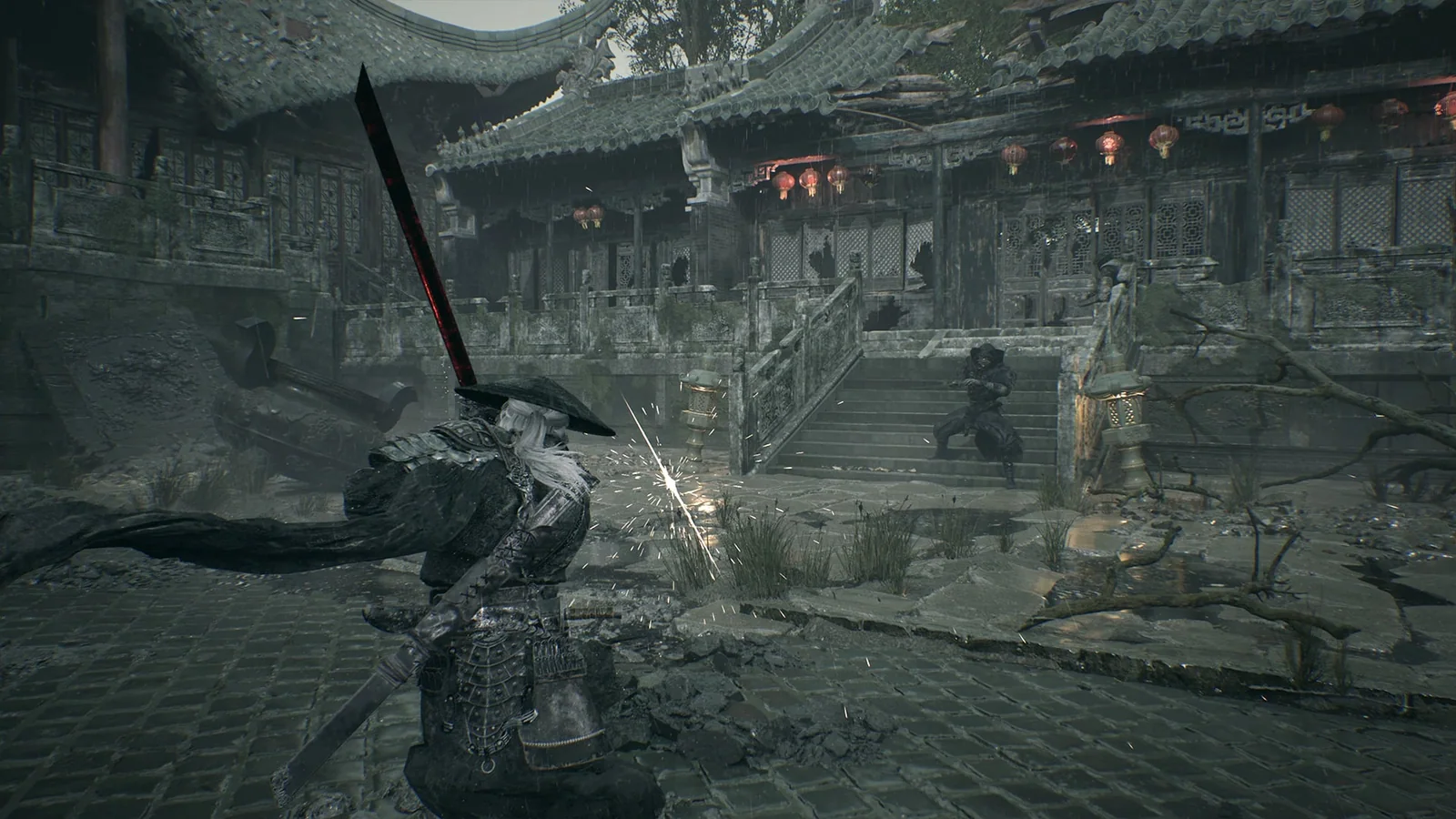
S-GAME describes Phantom Blade Zero defense as reactive parrying and dodging. Public footage shows fast exchanges, but it does not publish universal timing windows, color rules or frame counts. The reliable way to prepare is to read attack commitment, choose the response that preserves position and learn what opening follows.
01
Read origin, line and recovery
Watch three points: where the attack starts, the line it travels and how the attacker recovers. An attack that tracks late may punish an early dodge; a long committed line may reward moving through or around it. A parry may preserve close range, while a dodge may create the angle needed to reset group pressure.
Practice against one repeatable string and name each part aloud: start, travel, contact, recovery. Once the shape becomes predictable, attach the in-game defensive input. The method avoids relying on values that may differ between demos, difficulties or the launch build.
02
Defend against formations, not just individuals
Seven Stars demonstrates coordinated attackers who alternate group and individual pressure. The immediate blade is only part of the problem; Soul’s final position determines whether the next swordsman can connect. A technically successful response can still be strategically poor if it ends inside the formation.
When several attackers share the screen, prioritize camera awareness and an exit lane. Shorten offense after a defense, keep one flexible weapon option available and reassess whenever the formation changes.
03
Review the result of each response
After each clean defense, ask what it bought: damage, position, information or time. If it bought none, the response may be safe but inefficient. Repeat the sequence with the other defensive option and compare the resulting angle.
This review loop builds transferable skill. Exact controls and timing will arrive with the final game; understanding why a response works remains useful across weapons, encounters and difficulty settings.