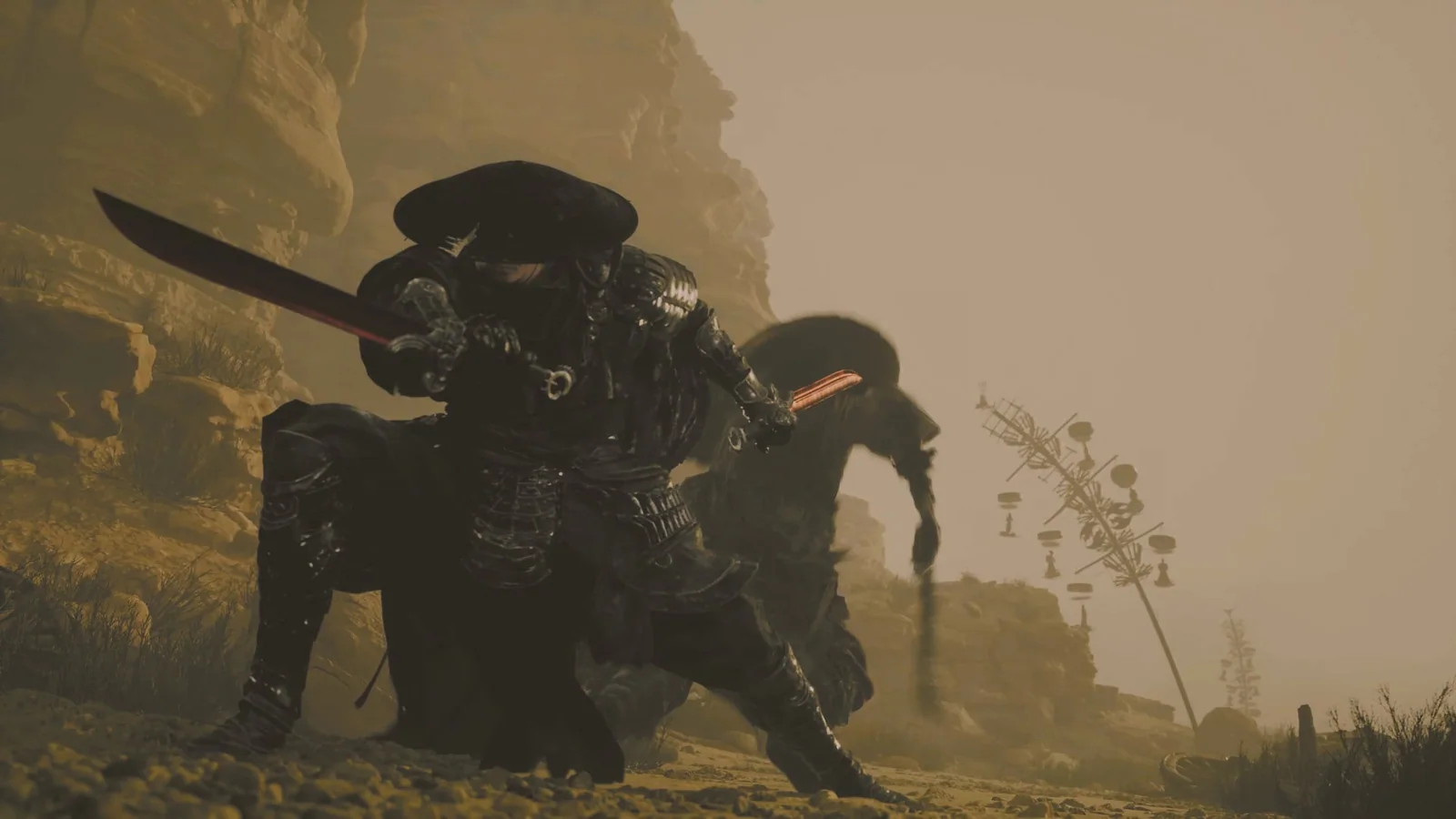
Phantom Blade Zero combat combines martial-arts motion capture with a responsive action-game structure. S-GAME’s public material identifies reactive parrying and dodging, simple inputs that produce long-form cinematic attacks, two main weapon slots, two Phantom Edge slots, executions and weapons taken from powerful foes. The demonstrations show the rhythm clearly while leaving exact frame data, input maps and upgrade mathematics for the final build. Its clearest lesson is to read position and recovery before converting a successful defense into a longer attack sequence.
01
Defense sets the rhythm
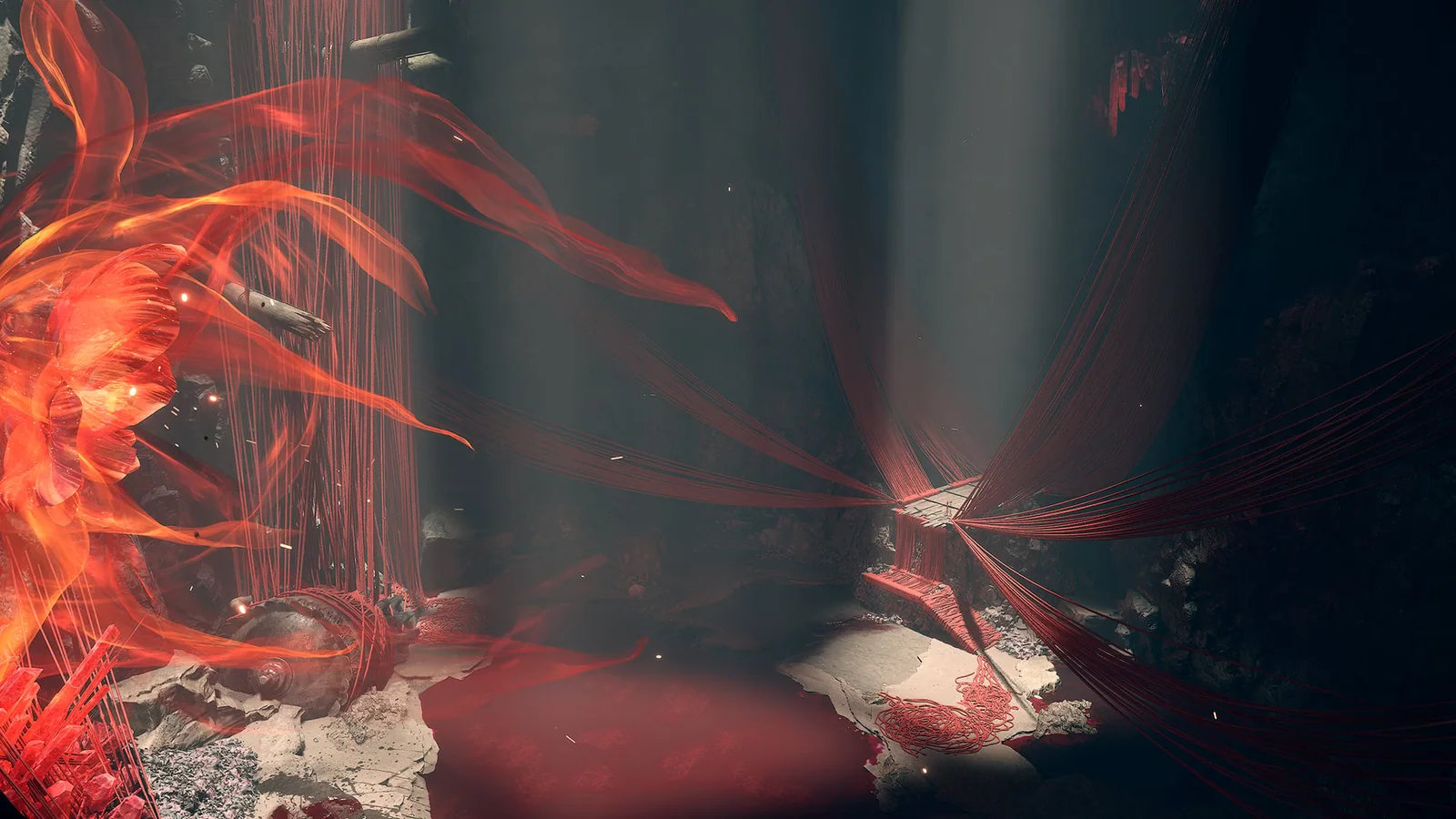
The combat reveal does not describe defense as passive damage reduction. It presents parrying and dodging as reactions that test the player’s reading of an attack. In practice, that means the enemy’s posture, weapon line and group formation should determine the response before a combo starts. The Seven Stars fight is the best public example: seven swordsmen coordinate pressure, separate into individual attacks and then change the encounter’s movement grammar in the string-puppet phase.
For learning, isolate one cue at a time. Watch where an attack begins, whether its path tracks Soul, how long the attacker remains committed and where Soul stands after the response. A parry that leaves Soul in range serves a different purpose from a dodge that resets the angle. The launch game may use additional terminology or resources, but spacing and recovery remain observable facts on every difficulty.
The Phantom Blade Zero combat system is easiest to learn as a sequence of questions: where does the attack begin, which line does it occupy, where will Soul finish after the response and what action is safe during the recovery? This sequence is slower than guessing once and much faster than repeating an unexplained mistake.
A Phantom Blade Zero combat practice run should reserve one attempt for defense only: identify the attack line, test the response and note Soul’s position without extending into offense. A second run can then add one short conversion, making the cost of greed visible instead of anecdotal.
02
Simple inputs, deliberate sequence
S-GAME says the arsenal supports dazzling combos and executions with simple inputs. “Simple” should not be read as automatic. The demonstrations show choreographed-looking strings because animation, hit reaction and weapon transitions are tightly staged. The player’s job is still to decide when a string is safe, when to stop and which tool preserves momentum without running into the next attack.
Build an offensive sequence around confirmed events: a defensive success, a missed enemy attack, a stagger or an exposed flank. Begin with a short main-weapon string, confirm that the target remains vulnerable, then extend with a second weapon or Phantom Edge. End early when another opponent enters range. This keeps the cinematic presentation tied to decision-making instead of turning every opening into the same memorized sequence.
Phantom Blade Zero combat looks cinematic because motion capture and action choreography connect poses with unusual clarity. Players still decide whether an opening supports a short confirmation, a weapon transition or an execution; stopping a string before group pressure returns is part of the rhythm.
Phantom Blade Zero combat analysis should compare the same formation with one changed weapon slot. Keep the opponent, route and defensive plan stable so the new reach or recovery can be judged without several variables hiding the result.
03
The 2+2 loadout changes the decision tree
Two main weapons and two Phantom Edges mean a complete kit has four distinct opportunities to solve combat problems. Main weapons form the dependable core. Phantom Edges are the more unusual layer, designed for player expression and devastating attacks. More than thirty weapons and more than twenty Phantom Edges create a large combination space even before signature techniques are considered.
Evaluate a loadout by roles, not rarity labels. One main weapon may establish safe pressure while the other handles range or commitment. One Phantom Edge may open a defense while the second converts a clear window. If two slots solve the same problem with the same timing, the kit may be wasting flexibility. The full game’s training or early encounters should provide the best place to test these relationships before judging damage alone.
A Phantom Blade Zero combat loadout should preserve one dependable answer while another slot is tested. Run the same encounter with the new option, compare distance and commitment, then keep it only when the four-slot kit gains a decision it did not have before.
04
Encounters can change form
The Year of the Snake sequence demonstrates more than a boss name. Seven Stars begins as coordinated combat among multiple swordsmen. The surviving disciples then manipulate their leader with crimson threads, suspending him in an unstable puppet form whose movement is harder to anticipate. The player has to discard the rhythm learned in the first phase and observe again.
Use that encounter as the model for future bosses: identify the current rules, not the rules from thirty seconds ago. A phase transition may change range, attack origin, camera pressure or the safest direction of escape. Preserve a flexible weapon option until the new pattern is understood. This is more reliable than any pre-release claim about exact health values or phase checkpoints.
Phantom Blade Zero combat encounters can replace one movement grammar with another inside the same fight. Seven Stars moves from organized swordsmen to an unstable suspended puppet, demonstrating why the safest phase-two habit is to observe again instead of carrying phase-one timing forward.