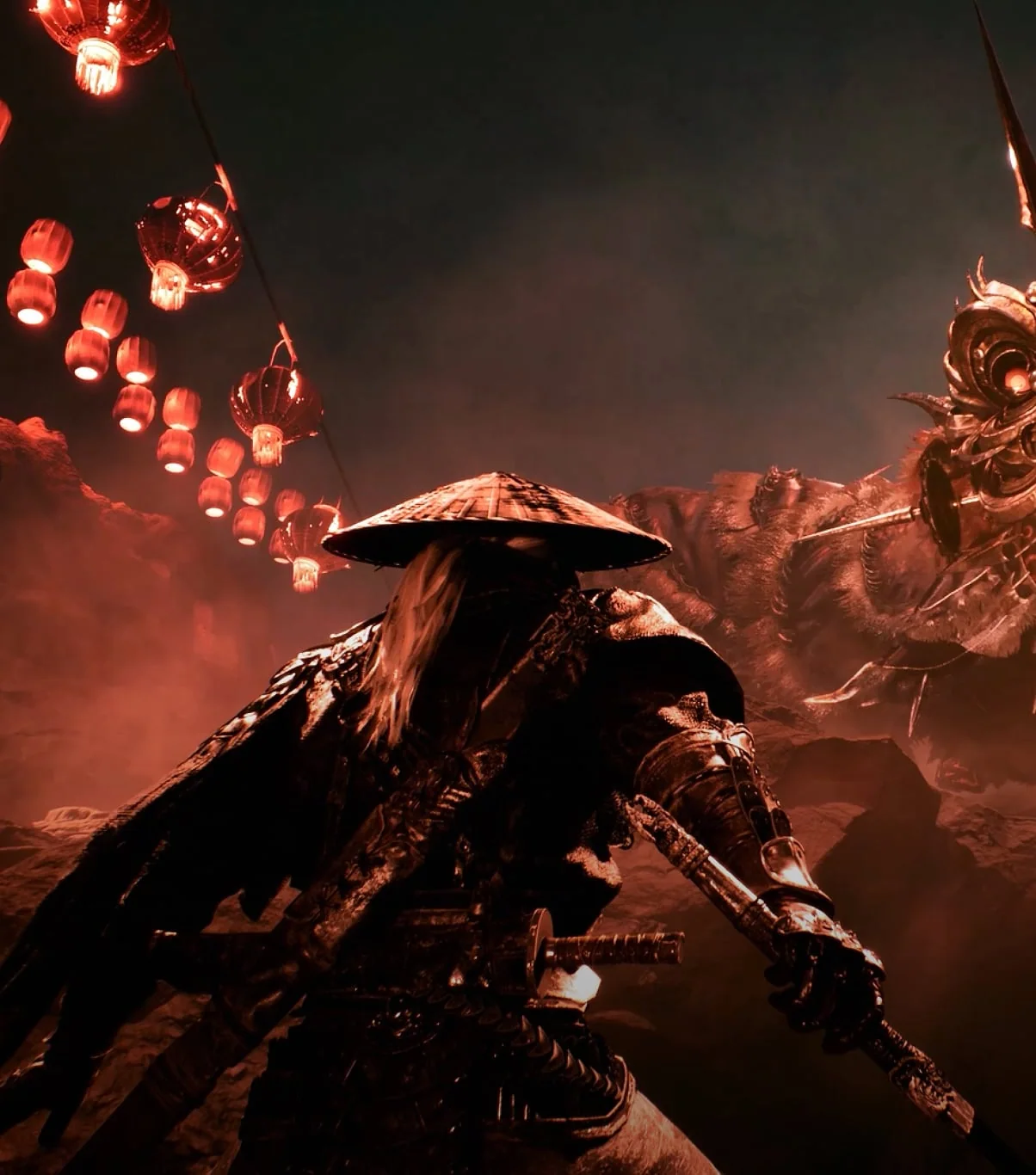
Kungfupunk is S-GAME’s term for Phantom Blade Zero’s fusion of martial-arts tradition and disruptive modern or mechanical forms. The official store copy cites the golden age of Hong Kong action cinema, authentic martial techniques, machinery, iron and smoke. The wider world adds fantasy, science fiction and folk horror. The result is not simply steampunk scenery behind sword combat; the collision reaches movement, bodies, weapons and locations.
01
The martial foundation
Motion capture is directed through veteran action choreographers and performed by martial artists. S-GAME presents every stance and strike as grounded in authentic technique before it is transformed by game timing and camera work. The Seven Stars formation makes coordination itself the spectacle.
Hong Kong action cinema also supplies a visual grammar of readable bodies, exchanged momentum and dramatic use of space. Simple player inputs can produce cinematic motion because the choreography has already organized how one pose leads into the next.
02
Where the punk enters
Mechanical spectacles, articulated armor, augmentation, ray-traced ancient towns and weapon forms that extend beyond conventional blades disrupt the period silhouette. The punk layer is an attitude of recombination: ancient codes continue, but iron and modern rhythm change how they are expressed.
Folk horror prevents the machinery from feeling clean or corporate. Masks crack, crimson threads animate a body and human forms acquire unsettling functions. Technology in the Phantom World is often intimate, worn or embedded.
03
How to read kungfupunk design
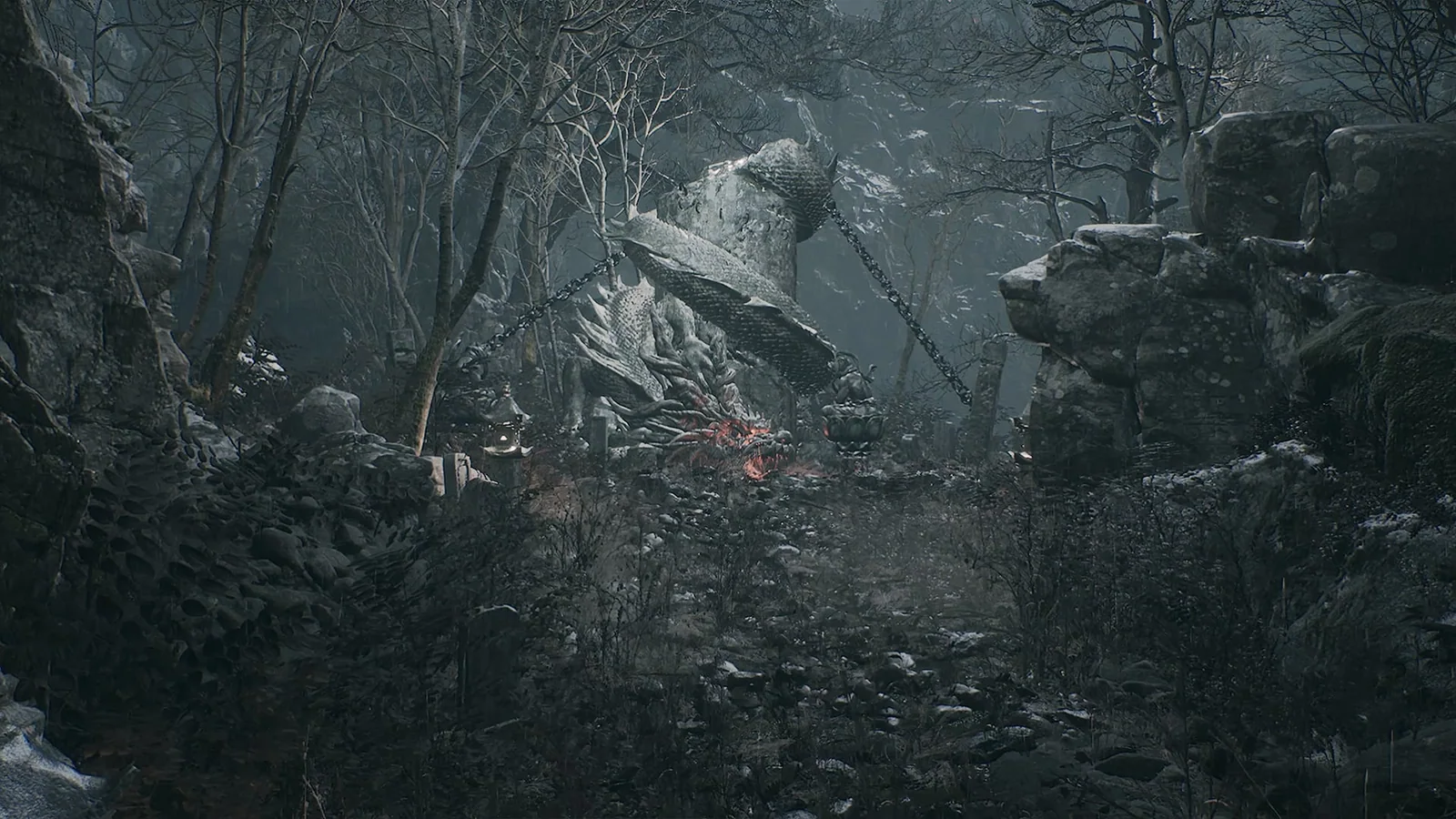
Look for the familiar base and the alteration. A rain-black wandering swordsman becomes kungfupunk when armor joints, engineered tools or impossible motion change the traditional outline. An ancient town becomes kungfupunk when scanning, wet light and machinery sharpen its conspiracy without erasing its local geometry.
This reading also helps distinguish the game from a generic dark action RPG. Its identity lives in the relationship between elements, not in a black-and-red palette alone.